
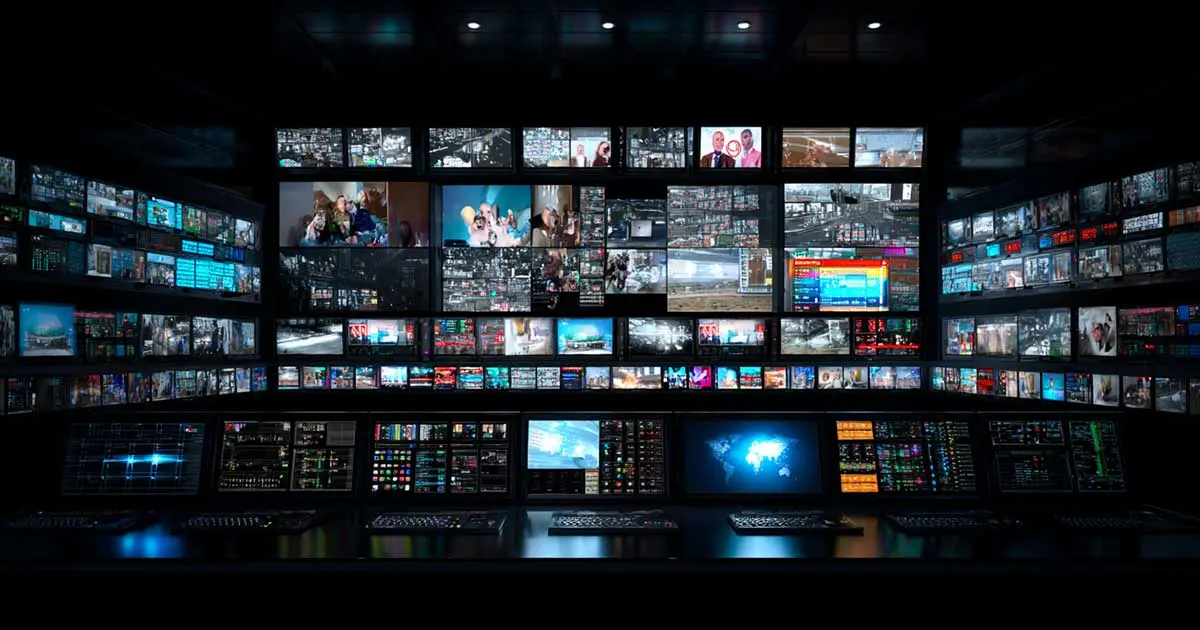
The question is rarely the abbreviation itself. What people actually want to know is: does it work, what does it cost, and is it meaningfully different from what they already have? The answer to all three is yes. IPTV is a technology that delivers TV over the internet protocol rather than through a cable, antenna, or satellite signal, and it differs from ordinary streaming platforms on one decisive point: it is built around live, linear TV and a full channel structure.
What does IPTV actually mean?
IPTV is short for Internet Protocol Television. Technically, it is a method for sending audiovisual content over an IP-based network — the same network that carries email, web pages, and everything else you do online. It is not a product on its own. It is a transmission technology.
Cable TV sends its signal as analogue or digital frequencies down a physical coaxial cable. Antenna TV uses radio signals. IPTV packages content into IP packets and sends them over broadband to a device that can unpack and display them. The end result for the viewer is the same: a TV channel plays on the screen.
How IPTV works technically
An IPTV system has three core parts. A content provider or operator receives and processes TV signals. A distribution server packages those signals and sends them out. Your client device — the TV, phone, or box — fetches and plays the stream.
For live TV, this happens in real time using a protocol called multicast or unicast, depending on the network setup. On-demand content works more like a download on request: you select a title and the server sends it to you.
Two terms come up frequently when configuring IPTV:
- M3U playlist: a text file containing the links to all channels and on-demand titles. Your IPTV player app reads this file to know what to play.
- EPG (Electronic Program Guide): a programme schedule, equivalent to the TV guide in traditional cable. It shows what is on now and what is coming up, so you can browse ahead in time.
The actual streaming uses compression formats such as H.264 or H.265 to cut bandwidth requirements without sacrificing picture quality.
IPTV vs. traditional streaming platforms
A standard streaming platform owns or licenses a specific content catalogue. You pay for access to what they have. The catalogue is fixed from your side — it is what it is.
IPTV is structured differently. It is a channel and schedule system, nearly identical to traditional cable TV, but delivered over the internet. You get a channel list, an EPG, and the ability to switch between live broadcasts exactly as if you had cable. Live sport, news, and direct broadcasts from around the world are the core offering — not a curated video library.
Most IPTV operators offer an on-demand library alongside live TV. Asgard IPTV gives you access to both within one subscription, without separate categories or add-on fees.
Which devices can you use IPTV on?
This is one area where IPTV departs sharply from traditional TV distribution. You are not tied to one screen. The device types that support IPTV include:
- Smart TVs (most models from the past five or six years)
- Android phones and Android TV boxes
- iPhone and iPad (iOS)
- Amazon Fire TV and Fire TV Stick
- MAG set-top boxes
- PC and Mac via browser or a dedicated app
That means you can watch on the living room TV, on your phone during a commute, or on a laptop at the cabin — all on the same subscription. See the full breakdown on the supported IPTV devices and compatibility page.
What you need to get started
Four things are required:
- A stable internet connection. For HD streaming, 10 Mbps is sufficient. 4K content typically requires 25 Mbps or more per device streaming simultaneously.
- A compatible device. See the list above.
- An IPTV player app. This is the application that reads the M3U playlist and displays the channels. Ready-made apps exist for every platform.
- An active IPTV subscription. The subscription provides the playlist and EPG data.
Setup takes most people under ten minutes. The step-by-step setup guide for Smart TV, Android, and iOS walks through the specific process for each device type.
| Quality | Recommended speed |
|---|---|
| SD (480p) | 5 Mbps |
| HD (1080p) | 10–15 Mbps |
| 4K / UHD | 25 Mbps per device |
Is IPTV legal?
IPTV as a technology is legal. Sending TV over the internet protocol does not break any law in itself, just as a web browser is not illegal even though it can visit illegal websites.
What determines legality is the content. Stream content that is correctly licensed for distribution and there is no issue. Stream content without rights clearance and it is a copyright violation, regardless of which technology is used to deliver it.
Asgard IPTV provides hosting and streaming infrastructure. Customers are responsible for the content they choose to stream through the service. The details are spelled out in Asgard's terms of service.
When IPTV fits best
Some situations where IPTV suits viewers better than traditional cable or standard streaming platforms:
- Nordic expats abroad who want to follow Nordic-language content and sport from home without paying for a local cable package.
- Cord-cutters who pay for cable but use a fraction of the channels, and want to switch to something flexible without a binding contract.
- Multi-person households where two or three people want to watch different things on different screens at the same time.
- Sport and film viewers who want broader access to European and international live broadcasts than Nordic streaming platforms offer.
Want to see what content categories are available? The channel overview gives a sense of the range on offer.
Frequently asked questions
-
What does IPTV stand for?
IPTV stands for Internet Protocol Television. It means TV content is delivered over the same IP-based network you use for everything else on the internet, rather than through a cable, antenna, or satellite signal.
-
What do I need to use IPTV?
You need a stable internet connection (at least 10–25 Mbps for HD and 4K), a compatible device, an IPTV player app, and an active subscription. See the setup guide for the specific steps on each device.
-
Is IPTV legal?
IPTV as a technology is legal. Legality depends on whether the content you stream is correctly licensed. Asgard IPTV provides hosting and streaming infrastructure; customers are responsible for the content they choose to stream through the service.
-
What is the difference between IPTV and a regular streaming service?
Streaming platforms own or license a fixed content catalogue and give you access to it. IPTV delivers linear live TV and on-demand content through a channel list and EPG structure, similar to traditional cable but over the internet.
-
Where can I find answers to more questions?
Visit our full FAQ page for questions about subscriptions, devices, billing, and technical support.
Ready to try it?
Asgard IPTV offers a paid 48-hour test plan at €4 so you can check the service on your own device and connection before committing to a longer plan. No binding period, no hidden fees.